Ecommerce SEO is the practice of optimizing an online store so that product pages, category pages, and core site sections appear for high-intent searches on Google. Unlike general SEO, ecommerce SEO focuses on product discoverability, search relevance, site architecture, and purchase readiness.
This guide takes a beginner’s approach, starting with the basics, explaining the core SEO functions that matter most for online stores, and then walking through how to build a complete ecommerce SEO strategy from the ground up.
What Is Ecommerce SEO?
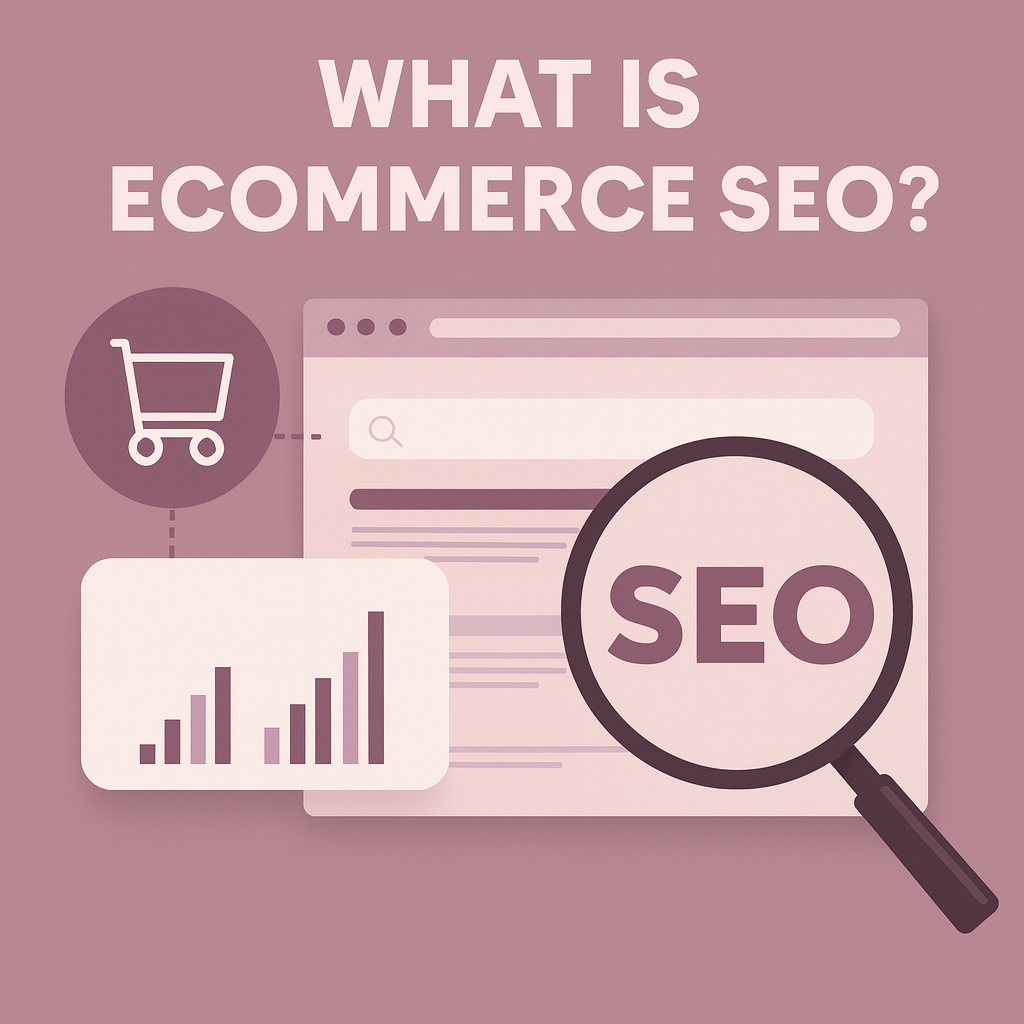
Ecommerce SEO is the process of improving an online store’s visibility in search engines by optimizing product pages, category pages, site structure, and technical elements. The goal is to help shoppers find the right products when they are actively searching to compare, evaluate, or buy.
Unlike content-led SEO, ecommerce SEO relies heavily on structured data, clear page hierarchy, clean URLs, internal linking, and precise keyword mapping. Search engines must understand not just what your site is about, but how each product, category, and attribute relates to a user’s query.
Strong ecommerce SEO improves search relevance, increases qualified traffic, and reduces dependence on paid advertising over time.
Why Ecommerce SEO Matters
Organic search remains one of the highest-intent traffic sources for retail websites. Users searching for products already have a problem, preference, or purchase goal in mind.
Effective ecommerce SEO:
- improves product and category visibility
- captures bottom-funnel purchase traffic
- scales traffic without rising ad costs
- supports long-term revenue growth
As catalogs grow, advanced ecommerce SEO becomes essential to prevent duplicate content, indexing issues, and internal competition between pages.
How Ecommerce SEO Works
SEO for retail websites follows four core stages:
[ Crawl ] → [ Index ] → [ Relevance Match ] → [ Rank & Convert ]
Search engines crawl your ecommerce website, interpret your URLs, analyze your product information, and evaluate how relevant each page is for user queries. Strong ecommerce technical SEO, optimized content, internal linking, and structured schema markup all help search engines understand which pages to rank for purchase-ready keywords.
The Most Important Ecommerce SEO Functions
Before building a strategy, it’s critical to understand the core functions that make ecommerce SEO work. These functions and frameworks define what actually drives results.
1. Keyword discovery and search intent mapping
Ecommerce SEO begins with understanding how customers search. This includes category-level searches, product-specific searches, and transactional modifiers. Without correct keyword mapping, pages compete with each other or rank for the wrong intent.
2. Page-type differentiation (homepage, categories, products)
Search engines expect different page types to serve different purposes. Category pages support discovery, product pages support decisions, and the homepage reinforces brand relevance. Mixing intents weakens rankings.
3. On-page optimization for ecommerce
Titles, descriptions, headings, images, internal links, and schema markup help search engines interpret relevance. On-page SEO for ecommerce must balance clarity for algorithms and usability for shoppers.
4. Technical SEO and crawl control
Large ecommerce sites generate thousands of URLs through filters, sorting, and variants. Technical SEO ensures search engines crawl the right pages, index the correct versions, and ignore duplicates.
5. Content support for search relevance
Content such as buying guides, comparisons, and FAQs supports category and product pages by capturing early-stage queries and reinforcing topical authority.
How to Create an Ecommerce SEO Strategy (All-in-One Guide)
An ecommerce SEO strategy is not a checklist, it’s a structured system. The steps below follow and cover everything needed to execute SEO effectively.
Step 1: Ecommerce Keyword Research (Foundation)

Ecommerce keyword research defines what pages your store needs, how they should be structured, and what intent each page must satisfy. Unlike blog SEO, where one article can target multiple loosely related queries, ecommerce SEO requires strict keyword-to-page alignment to avoid duplication, cannibalization, and wasted crawl budget.
The goal is not to collect as many keywords as possible, but to build keyword groups that map cleanly to real URLs, categories, subcategories, and product pages, so search engines can clearly understand where each query should land.
Category-level keywords (structure your store)
Category-level keywords describe product groupings, not individual items. These keywords typically have higher search volume and are used by shoppers who are browsing, comparing options, or narrowing down choices.
Examples:
- “wireless earbuds”
- “office desks”
- “women’s running shoes”
These terms usually map to category or collection pages, not product pages. They play a critical role in shaping your site architecture because each major category keyword should correspond to a dedicated, indexable page.
When evaluating category-level keywords, look beyond raw volume. Ask:
- does this keyword represent a clear product grouping?
- can it support multiple products?
- does the SERP show category-style pages (collections, PLPs) rather than single products?
If Google favors category pages for a query, that’s a strong signal it belongs at the category level in your SEO structure.
Product-level keywords (capture purchase intent)
Product-level keywords describe specific items or SKUs. These searches often include brand names, model numbers, or precise attributes, indicating the user knows exactly what they want.
Examples:
- “sony wh-1000xm5 headphones”
- “nike revolution 6 men blue”
These keywords should map one-to-one with product pages. Because intent is highly specific, relevance must be exact. Even small mismatches—such as targeting a broader term on a product page, can prevent rankings or lead to low conversion rates.
Product-level keywords usually have lower search volume than category terms, but they convert at a significantly higher rate. In ecommerce SEO, these pages often generate the highest revenue per visit, making accurate targeting essential.
Transactional modifiers (identify readiness to buy)
Transactional keywords indicate that the user is close to making a purchase. These modifiers are often added to both category-level and product-level searches.
Common examples include:
- buy
- price
- discount
- sale
- best
- near me (especially relevant for hybrid or local ecommerce)
These terms shouldn’t be forced into every title or description. Instead, they should be incorporated naturally where they match intent, such as in meta titles, supporting copy, FAQs, or category descriptions.
Transactional modifiers are especially useful when:
- prioritizing pages to optimize first
- identifying high-conversion opportunities
- differentiating informational vs commercial queries
Attribute and variant keywords (scale long-tail visibility)
Attribute and variant keywords capture long-tail searches related to product specifics. While each individual query may have low volume, collectively they represent a large share of ecommerce traffic, especially for stores with extensive catalogs.
Common attribute types include:
- size (S, M, L, 42, 750ml)
- color (black, white, navy)
- material (leather, cotton, stainless steel)
- model or version numbers
- dimensions, capacity, or technical specs
These keywords typically do not require separate pages. Instead, they should be integrated into product titles, descriptions, specifications, and structured data so search engines can match detailed queries to the correct product.
For large stores, consistent attribute usage also improves internal search accuracy and filtering performance, which indirectly supports SEO through better engagement signals.
How to evaluate ecommerce keywords correctly
Not all keywords with search volume are worth targeting. Ecommerce keyword evaluation should balance three factors:
- Relevance
The keyword must accurately describe the product or category. If the user lands on the page, their intent should be fully satisfied without confusion. - Competition
Analyze the SERP to understand who you’re competing with. Large marketplaces often dominate broad terms, while niche or attribute-based queries may be more realistic opportunities. - Intent clarity
The keyword should clearly signal whether the user wants to browse, compare, or buy. Ambiguous intent leads to poor performance even if rankings are achieved.
SEO tools help validate demand, trends, and competition, but human judgment is essential for deciding where a keyword belongs in your site structure. Poor mapping, not poor tools, is the most common cause of ecommerce SEO underperformance.
Output of good ecommerce keyword research
When done correctly, keyword research should result in:
- a clear list of category pages to create or optimize
- one primary keyword assigned to each product page
- supporting modifiers and attributes mapped to existing URLs
- minimal overlap between categories and products
This clarity becomes the foundation for every other ecommerce SEO activity, from on-page optimization to technical SEO and internal linking.
Step 2: Product Page SEO (Revenue-Focused Optimization)
Product pages are the final decision point in ecommerce. From an SEO perspective, they must satisfy exact-match intent with maximum clarity. Search engines evaluate product pages more strictly than blog pages because users expect precision, not exploration.
A well-optimized product page clearly answers:
- what the product is
- who it’s for
- how it differs from alternatives
- whether it’s available and trustworthy
Product titles and headings
Search engines rely heavily on the product title (usually the H1) to understand relevance. Titles should follow a consistent naming structure across the catalog. Including brand, product type, and one or two defining attributes improves accuracy without overloading the title.
Frequent title changes or promotional language (“Best”, “Limited Offer”) can weaken relevance signals and confuse indexing.
Product descriptions

Descriptions should focus on decision support, not keyword density. Strong descriptions:
- explain core benefits and use cases
- include specifications and constraints
- address common objections
- clarify compatibility and care
Thin or manufacturer-supplied descriptions are one of the most common causes of weak product page rankings because they offer no differentiation.
Media and visuals
Search engines interpret images through filenames, surrounding text, ALT attributes, and structured data. High-quality visuals increase engagement, which indirectly reinforces relevance signals.
Structured product data
Schema markup allows search engines to interpret price, availability, brand, and reviews with certainty. Pages with clean, validated product schema often earn richer SERP listings, which improves click-through even without ranking changes.
Step 3: Category Page SEO (Traffic & Discovery Engine)
Category pages serve a different role than product pages. They support browsing, comparison, and narrowing intent, which is why search engines often prefer them for high-volume commercial keywords.
From an SEO standpoint, category pages help define:
- topical authority
- internal linking structure
- crawl priority
Category content
A short, helpful introduction (typically 100–200 words) gives search engines context about the product group. This content should explain:
- what products are included
- who the category is for
- how products differ
Content should support discovery, not distract from browsing.
Internal linking
Category pages should link to:
- subcategories
- featured or representative products
- buying guides or FAQs
This strengthens topical relevance and improves crawl efficiency.
Filter and faceted control
Uncontrolled filters can generate thousands of duplicate URLs. Category SEO depends on correct canonical handling, noindex rules, and consistent internal linking to the primary category URL.
Thin or duplicate category pages dilute site-wide authority and reduce ranking stability.
Step 4: Ecommerce Site Architecture (Structural SEO)
Site architecture determines how easily search engines and users can navigate your store. In ecommerce, poor structure often causes crawl waste, orphaned products, and ranking dilution.
Hierarchical structure
A clear hierarchy ensures that:
- important pages receive more internal authority
- products are reachable within a few clicks
- categories reinforce topical relationships
The ideal structure is shallow but organized, allowing both users and crawlers to move efficiently from broad to specific pages.
URL design
URLs should reflect the hierarchy and remain stable over time. Clean URLs help search engines interpret page context and reduce duplicate indexing.
Changing URL structures without proper redirects is a common cause of traffic loss in ecommerce migrations.
Step 5: Ecommerce Technical SEO (Scalability & Control)
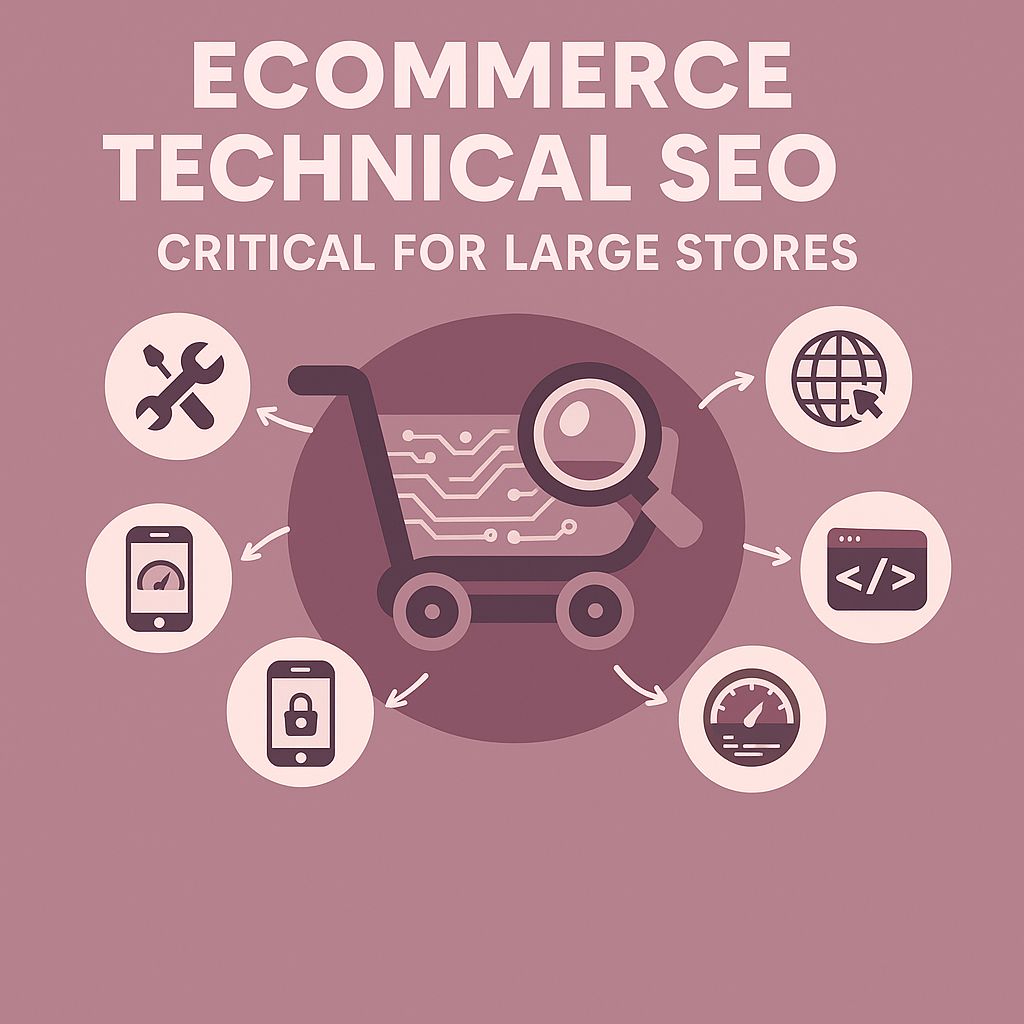
Technical SEO ensures search engines crawl, index, and rank the right pages, especially as catalogs grow.
Crawl control
Ecommerce sites naturally generate excess URLs. Technical SEO defines:
- which URLs should be indexed
- which should be ignored
- which should consolidate signals via canonicals
Performance and Core Web Vitals
Speed and layout stability directly affect rankings and conversions. Large images, third-party scripts, and unstable templates disproportionately hurt ecommerce sites due to repetition across many URLs.
Structured data consistency
Schema must be consistent across templates. Partial or broken implementation often causes eligibility loss for rich results across the entire catalog, not just individual pages.
Technical SEO issues compound silently, making early discipline essential.
Step 6: Ecommerce Content Strategy (Authority & Support)
Content in ecommerce SEO is not separate from product and category pages, it supports them.
The purpose of ecommerce content is to:
- capture early-stage search intent
- educate buyers
- reinforce category relevance
High-performing content types
- buying guides
- comparisons
- seasonal collections
- usage and care articles
Each piece should link contextually to relevant categories and products. Content without internal links provides limited SEO value in ecommerce environments.
Step 7: Link Building for Ecommerce (Authority Signals)
Backlinks help search engines assess trust and authority. In ecommerce, links rarely point to product pages directly but instead strengthen category and domain-level rankings.
Effective ecommerce link sources
- manufacturers and suppliers
- affiliate partners
- product roundups
- digital PR placements
- local citations
Quality and relevance matter more than volume. Low-quality links increase risk without meaningful ranking benefit.
Step 8: Conversion Rate Optimization + SEO Alignment
SEO brings traffic, but conversions validate relevance.
Search engines indirectly observe:
- bounce rates
- dwell time
- interaction patterns
Improving clarity, trust, and usability strengthens these signals.
CRO elements that support SEO
- reviews and ratings
- clear shipping and returns
- fast checkout
- strong mobile UX
- visible CTAs
SEO and CRO are not separate disciplines in ecommerce—they reinforce each other.
Step 9: Local & International Ecommerce SEO
Local ecommerce SEO
For stores offering pickup or physical locations, local SEO improves relevance for geo-modified searches. Accurate business listings and localized inventory signals help bridge online and offline experiences.
International ecommerce SEO
International stores must manage language, currency, and regional intent carefully. hreflang implementation, localized keywords, and shipping clarity prevent duplicate content issues and improve regional rankings.
Common Ecommerce SEO Mistakes (Why Stores Fail)
Most ecommerce SEO failures are structural, not tactical.
Common issues include:
- duplicate product descriptions
- thin categories
- uncontrolled faceted navigation
- poor canonical handling
- slow performance
- missing schema
These issues prevent search engines from confidently ranking pages—even when demand exists.
Best Ecommerce SEO Tools
| Tool | Primary Use | Why It Matters |
| Ahrefs | Keyword + backlink analysis | Crucial for understanding category opportunities |
| SEMrush | Audits + content planning | Helps fix ecommerce SEO mistakes |
| Screaming Frog | Site crawling | Identifies duplicates, thin pages, broken links |
| Google Search Console | Indexing insights | Shows product indexing issues |
| SurferSEO | On-page optimization | Great for category page SEO |
| PageSpeed Insights | Speed analysis | Improves LCP, FID, CLS |
These are among the most effective ecommerce SEO tools for scaling traffic.
Ecommerce SEO Checklist
On-Page SEO
- Useful product descriptions
- Optimized titles and images
- Internal linking
- Product schema markup
- Review integration
Technical SEO
- Fast load time
- Canonical tags
- XML sitemaps
- Robots.txt
- Structured data
Content SEO
- Buying guides
- Comparison posts
- Category FAQs
CRO
- High-quality visuals
- Reviews
- Trust elements
How to Improve Ecommerce Search Relevance
- Use attribute-rich product titles
- Add structured FAQs
- Improve internal search UX
- Tag products with NLP-based attributes
- Add semantic keywords
- Improve product categorization clarity
These dynamic ecommerce SEO methods help large catalogs rank more accurately.
Conclusion
Ecommerce SEO isn’t just about visibility, it’s about helping shoppers find the right products, at the right moment, with zero friction. With the right structure, content, and technical groundwork, your store can turn organic search into a consistent revenue engine. If you want e-commerce SEO done with clarity, precision, and measurable impact, Cartiful is here to help.
Frequently Asked Questions
What is ecommerce SEO?
Ecommerce SEO is the process of optimizing your store’s products, categories, and content to improve visibility on search engines. It includes keyword research, technical improvements, schema markup, URL optimization, and better on-page content.
How do I improve SEO for my ecommerce website?
Optimize product titles, descriptions, images, schema, speed, and internal linking. Fix duplicate content, enhance category pages, and improve UX. Regularly audit your technical SEO and monitor indexing via Search Console.
What are the best ecommerce SEO strategies?
Keyword research, strong category pages, optimized product descriptions, canonical tagging, improved faceted navigation, structured data, backlink building, and conversion-focused UX.
What is schema markup for ecommerce?
Schema markup adds structured product data (price, inventory, reviews) that helps Google display rich results. It improves click-through rates and enhances product understanding.
What is the best URL structure for ecommerce SEO?
Use a clean, hierarchical structure like /category/subcategory/product-name/. Avoid long IDs, dynamic parameters, or duplicate URLs.
Why do ecommerce sites struggle with SEO?
Common issues include duplicate product content, poor filtration systems, slow pages, unoptimized images, lack of schema markup, and crawling problems caused by faceted navigation.
Do retail websites need an ecommerce SEO specialist?
Yes. Large catalogs require advanced technical handling, structured content mapping, canonical management, and ongoing performance monitoring that specialists handle effectively.
What affects ecommerce search relevance the most?
Product titles, structured data, category structure, internal linking, detailed attributes, and clean filtering systems heavily influence how search engines match your products to queries.