Skip to content
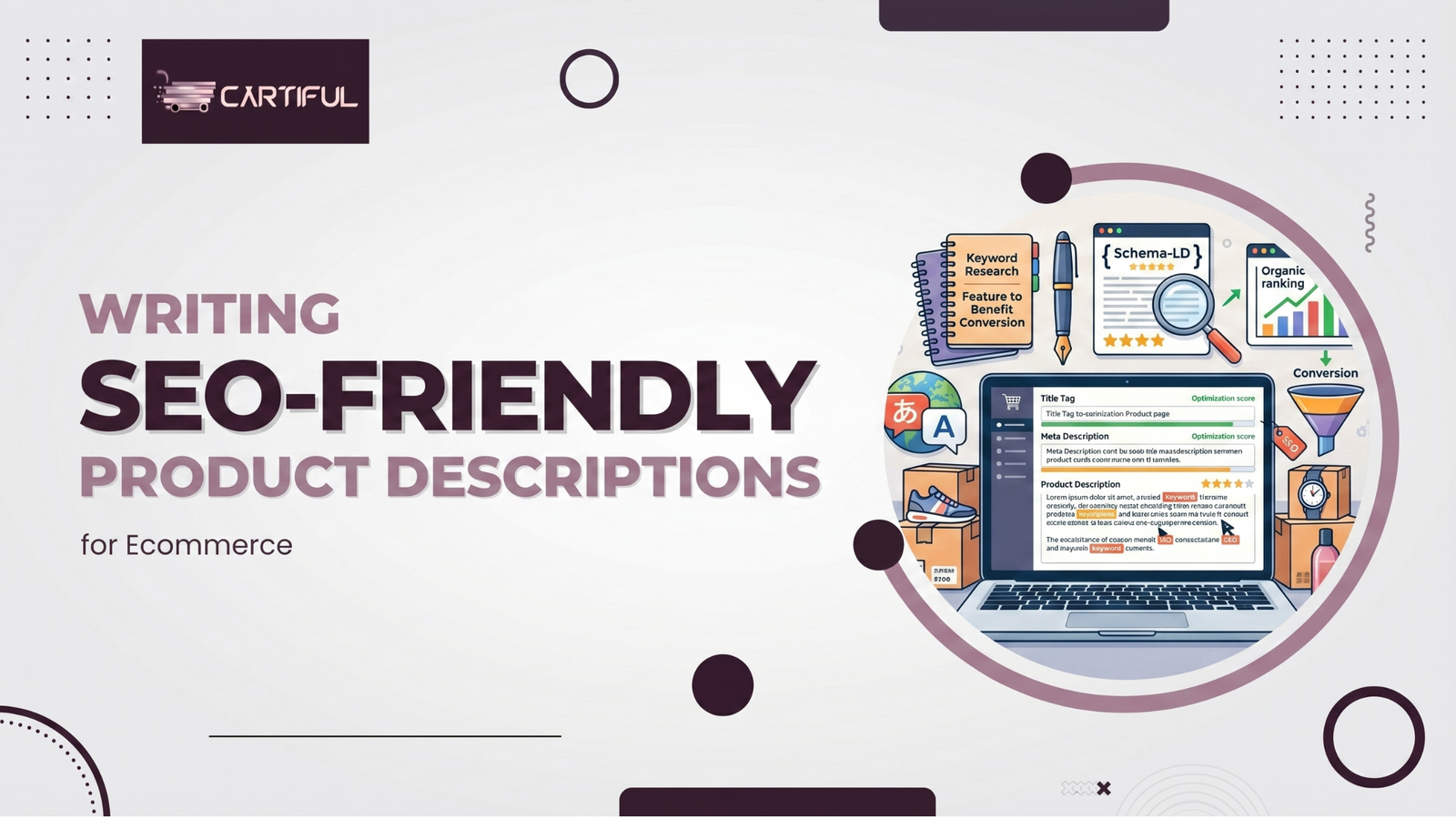
Product descriptions decide whether a product page shows up in a search result and whether a shopper buys or leaves.
For ecommerce store owners, this is where traffic turns into revenue or bounce rates climb quietly.
This guide explains how to write SEO-friendly product descriptions that help search engines understand your products and help shoppers feel confident clicking “Add to Cart.”
Why Product Descriptions Matter
Product descriptions directly affect search visibility, conversion rates, and buying decisions. They help search engines understand what a product page should rank for, influence click-through rates from search engine results pages, and answer buyer questions that reduce bounce rate. Clear, keyword-aware product descriptions improve user experience and turn organic traffic into conversions.
Most merchants spend time perfecting images and adjusting prices, then rush the description copy. That usually backfires.
Well-written product descriptions connect product features to real use cases, match how people search, and support trust at the exact moment a buyer decides. That combination is what moves a product page from being just visible to actually converting.
What Is an “SEO-Friendly” Product Description?
An SEO-friendly product description clearly explains a product so search engines understand the product page, while shoppers get direct answers to buying questions. It matches real search terms, improves on-page engagement, lowers bounce rate, and supports conversions instead of replacing sales copy.
Writing SEO-Friendly Product Descriptions
It is important to start writing product descriptions with search intent, not keywords
Understand What Shoppers Are Really Looking For
Every search has a purpose behind it. Shoppers are either trying to learn something or trying to buy something.
Informational intent means the user wants answers.
For example: “what material is best for running shoes?” or “how noise cancellation works in headphones.”
Transactional intent means the user is close to purchase.
For example: “buy men’s running shoes size 10” or “wireless noise cancelling headphones black price.”
On a product page, your description should focus on transactional intent. That means explaining product features, product specifications, and benefits in a way that supports a buying decision.
Why Search Intent Matters More Than Keyword Stuffing
Keyword stuffing tries to rank by repeating the same focus keyphrase. Search intent tries to rank by answering what the shopper actually wants.
A product description that matches intent keeps users on the page longer, improves user experience, and lowers bounce rate. These engagement signals help improve search engine rankings and increase conversion rate at the same time.
intent, they perform better in search results and convert better once shoppers land on the page.
Do Keyword Research the Smart Way
a. Primary Keywords
Primary keywords describe exactly what the product is. They usually match how a buyer would name the item when searching.
On a product page, place the primary keyword naturally in the product title and within the first paragraph of the product description. This helps search engine bots understand relevance without hurting readability or user experience.
Avoid repeating the keyword everywhere. One clear, natural placement does more for search engine rankings than forced repetition.
b. Secondary & Long-Tail Keywords
Secondary and long-tail keywords reflect how buyers narrow their search.
These often include:
- Size and fit
- Color and finish
- Material or build
- Use-case or compatibility
Examples include phrases such as “leather laptop bag for work” or “ceramic non-stick pan for induction stove.”
These terms usually have lower search volume but higher conversion rates because they match buyer intent more closely.
c. Using Real Buyer Language
Real buyer language comes from customer reviews, Q&A sections, and support chats.
Using these phrases in product descriptions matches how people actually search, improves relevance on search engine results pages, builds trust, and increases conversion rate by answering questions in the shopper’s own words.
d. Modifier Keywords
Modifier keywords describe specific product attributes buyers care about when narrowing their search.
Examples include:
- lightweight backpack
- waterproof running shoes
- ergonomic office chair
- anti-slip yoga mat
These modifiers often appear directly in product descriptions because they highlight features that influence buying decisions.
Including them naturally improves long-tail keyword coverage and helps product pages match more specific search queries.
e. Comparison Keywords
Comparison keywords appear when buyers are evaluating options before purchasing.
Examples include:
- best running shoes for flat feet
- leather vs canvas laptop bag
- stainless steel vs ceramic cookware
These phrases often belong in supporting sections of product descriptions or linked buying guides, where you help shoppers understand differences between materials, features, or product versions.
Capturing these searches helps ecommerce stores reach buyers earlier in the decision process.
How to Structure an SEO-Friendly Product Description
1. Product Title
The product title should say exactly what the product is. It needs to be clear, descriptive, and easy to understand in a search result.
Use the primary keyword naturally, and skip internal SKUs or vague labels.
A strong product title helps search engines read the page correctly and improves click-through rates on search engine results pages.
2. Opening Paragraph (Above the Fold)
The opening paragraph does the heavy lifting. This is where most shoppers decide whether to keep scrolling.
Start with one clear value statement that explains who the product is for and the main benefit it delivers. Include the primary keyword once, in a way that sounds natural and supports user experience.
This section plays a big role in bounce rate and time on page.
3. Feature-to-Benefit Breakdown
Features explain what the product has. Benefits explain why the shopper should care.
Translate product features into keyword-rich content that delivers real outcomes, such as saving time, lasting longer, or solving a specific problem.
This approach supports conversion rate by helping buyers picture how the product fits their needs.
4. Scannable Formatting
Most shoppers skim product pages. Your description should work even when read quickly.
Use short paragraphs, clear subheadings, and strategic bullet points to highlight key details.
Good formatting improves visual readability, keeps users engaged, and supports both search engine rankings and customer experience.
To see how these principles work in practice, consider the difference between a weak and an optimized product description.
Example: Weak vs Optimized Product Description
Understanding the difference between a generic description and an optimized one helps clarify how SEO and conversion work together.
Weak description
“High quality leather laptop bag. Durable material and stylish design. Perfect for work.”
This description is vague, lacks keywords buyers search for, and does not explain why the product matters.
Optimized description
“This full-grain leather laptop bag is designed for professionals who carry a 15-inch laptop daily. The padded interior protects devices during travel, while reinforced shoulder straps support heavier loads without stretching. Ideal for office commuting, client meetings, and frequent business travel.”
The optimized version works better because it:
- uses natural keywords like leather laptop bag and 15-inch laptop
- explains how the product solves a problem
- gives shoppers a clear use case
Examples like this help transform product descriptions from generic catalog text into SEO-driven sales copy.
Write for Humans First, Algorithms Second
Keyword stuffing makes product descriptions harder to read and easier to distrust.
When shoppers see repeated keywords that add no value, confidence drops and conversions follow.
Clear language, natural tone, and smooth flow improve time on page, scroll depth, and add-to-cart actions.
These engagement signals support Search Engine Optimization, lower bounce rate, and help product pages convert organic traffic into sales.
Write the way buyers think and search. Search engines reward that behavior naturally.
Use Product Descriptions to Reduce Buying Friction
A product description should remove doubts, not create them. When shoppers hesitate, it is usually because something is unclear.
Answer Common Questions Before They’re Asked
Good product descriptions anticipate what buyers want to know. Questions about size, fit, material, compatibility, or use case should already be answered on the product page.
For example, instead of saying “high-quality fabric,” explain how the fabric feels, how it holds up after washing, or when it works best.
This improves user experience and reduces bounce rate from uncertain buyers.
Build Trust With Specifics
Specific details build confidence faster than broad claims.
Clear product specifications, measurements, care instructions, and usage notes help shoppers make decisions without leaving the page.
When buyers do not need to search elsewhere for answers, time on page increases and conversion rate improves.
Use Sensory Details
Descriptions become more persuasive when shoppers can imagine using the product.
Instead of writing: “soft fabric”
Write: “soft brushed cotton that stays comfortable during long wear.”
Sensory details help buyers picture texture, comfort, or usability, which improves engagement and supports conversion.
Use Outcome-Focused Language
Buyers respond more strongly to outcomes than vague features.
Instead of writing: “long battery life”
Write: “up to 18 hours of use on a single charge.”
Outcome framing makes benefits concrete and easier for shoppers to evaluate before purchasing.
Optimize Supporting Elements (Often Ignored)
Meta Titles & Meta Descriptions
Meta titles and meta descriptions shape how your product page appears in a search result.
Clear, keyword-aware descriptions improve click-through rates on search engine results pages and bring more qualified organic traffic.
Strong product descriptions often supply the exact language used in meta data. When the on-page copy is clear, meta descriptions become easier to write and more effective.
Image Alt Text
Alt tags explain images to search engine bots and support accessibility. Describe what the product looks like, how it’s used, or what variation is shown.
Use contextual keywords naturally, such as color or material. Avoid generic terms like “image” or file names.
Internal Linking
Internal links help users and search engines move through your ecommerce site naturally.
Product descriptions can link to related parts of your store, such as:
- category pages
- buying guides
- comparison articles
- related products
For example:
“Pair this leather laptop bag with our 15-inch laptop sleeve for extra protection.”
These connections improve crawl paths, distribute page authority across the site, and help shoppers discover related products without leaving the store.
Stronger internal linking supports ecommerce site architecture while increasing page depth and engagement.
Common Product Description SEO Mistakes to Avoid
Many product pages fail to rank or convert, not because of low search volume, but because basic description mistakes send weak signals to both users and search engines.
These issues quietly increase bounce rate and lower conversion rate.
- Copy-pasting manufacturer descriptions that offer no unique value or keyword-rich context
- Writing one product description for all variants, ignoring size, color, or material differences
- Ignoring mobile readability, which hurts user experience on ecommerce platforms
- Over-optimizing for keywords instead of writing for real buyer intent
- Forgetting conversion intent by focusing only on Search Engine Optimization, not on buying decisions
One common issue is failing to differentiate product variants.
Search engines and shoppers both benefit when product variants include unique description elements.
For example, a running shoe might have two versions:
- Mesh version: description emphasizes breathability and airflow for warm-weather running.
- Waterproof version: description focuses on rain protection and moisture resistance.
Even small differences in wording help search engines understand variant intent while helping buyers choose the right option.
Variant differentiation strengthens SEO signals and improves user experience.
How Often Should You Update Product Descriptions
Product descriptions should be reviewed regularly, not written once and left untouched. Search behavior, buyer expectations, and search engine rankings change over time.
Update your product descriptions when rankings drop on search engine results pages, when customer reviews reveal new buyer language, or when competitors improve their product pages.
These updates help align content with current search volume, buyer intent, and market trends.
Updating product descriptions signals freshness to search engines and search engine bots.
Fresh content supports crawl frequency, improves relevance scoring, and helps protect organic traffic while keeping the product page conversion-focused.
Final Thoughts
SEO-friendly product descriptions do more than fill space on a product page. They explain the product clearly, support search engine rankings, and help shoppers decide with confidence.
When written well, product descriptions improve user experience, lower bounce rate, and turn organic traffic into real sales. They help ecommerce store owners grow without relying only on ads or discounts.
If your store is getting visits but not enough checkouts, the product description is often the missing piece. Fixing it is one of the simplest ways to support steady ecommerce growth without sounding overly sales-focused.
For many ecommerce merchants, improving product descriptions becomes part of a broader conversion and growth strategy that includes content optimization, paid advertising, and on-site experience improvements.
Product descriptions are one of the few SEO elements that influence both rankings and revenue at the same time. When they match search intent, explain the product clearly, and remove buying doubts, they turn product pages from simple catalog entries into high-performing sales assets.