Skip to content
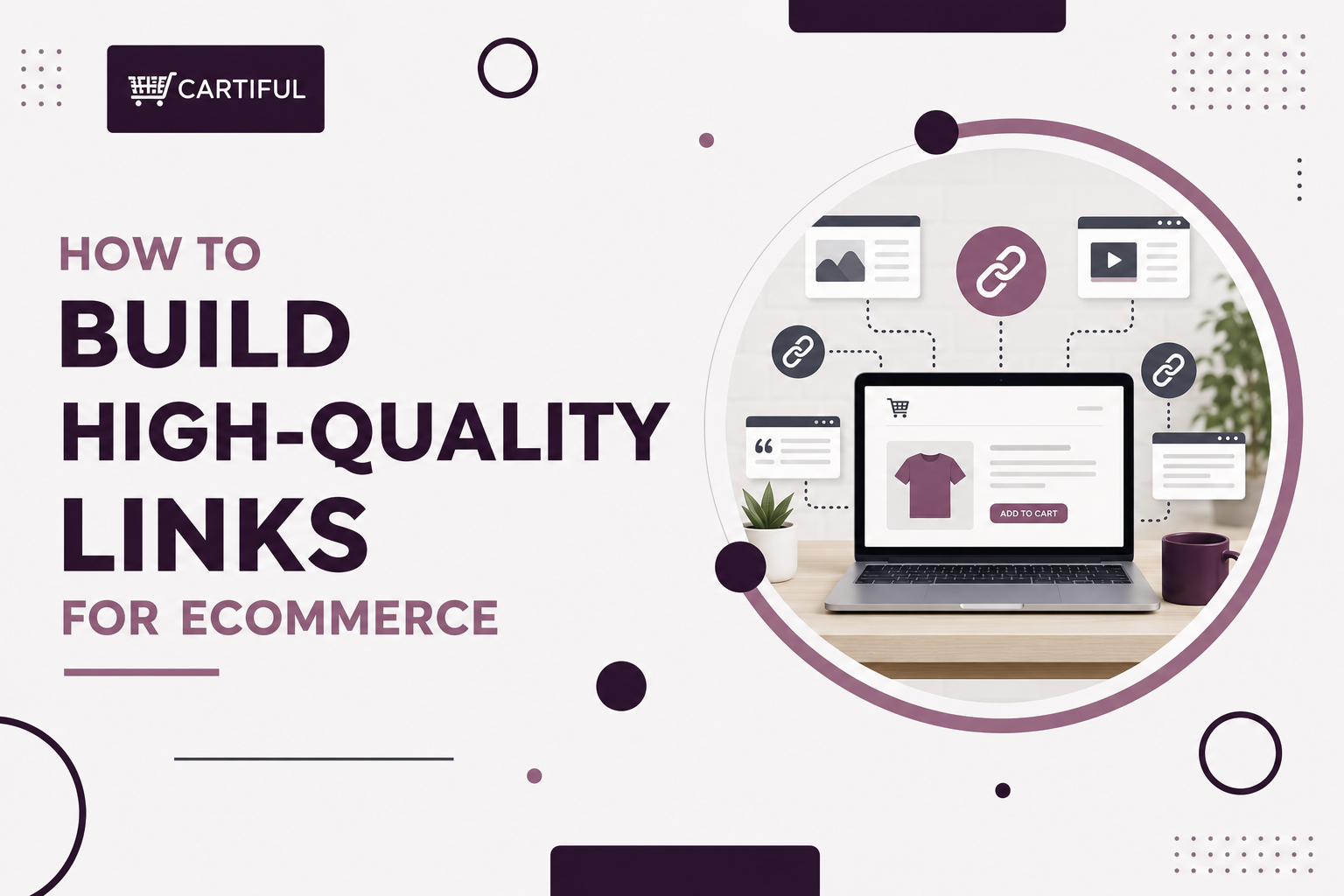
High-quality links are still one of the clearest signals that other sites trust, reference, or find value in your ecommerce brand. But for online stores, link building is harder than it looks. Product pages are built to sell, not to attract citations. Category pages are commercial hubs, not naturally shareable assets. And Google’s spam policies make it very clear that manipulative link schemes, bought links meant to pass ranking value, excessive exchanges, and scaled tactics designed mainly to influence rankings can violate policy. (Google for Developers)
That means ecommerce link building has to work differently. Instead of chasing volume, the better approach is to earn links through assets, stories, partnerships, expertise, and genuinely useful resources that fit the brand and the catalog. Google’s guidance on people-first content supports this approach by emphasizing helpful, reliable content created for people rather than for ranking manipulation. Google’s ecommerce documentation also reinforces that site structure and cross-page links help Search understand what matters most on a store. (Google for Developers)
At Cartiful, the goal would be simple: build links that strengthen the brand, support priority category pages, and hold up over time. That usually means using editorial content, merchant assets, supplier relationships, product expertise, and digital PR rather than defaulting to spammy shortcuts that disappear after the next link-spam cleanup. Google has also said that when its systems neutralize spammy links, any ranking benefit from those links cannot be regained. (Google for Developers)
What Counts as a High-Quality Link in Ecommerce
A high-quality link is not just a link from a high-metric domain. For ecommerce, it is usually a link that does at least one of these jobs well:
- sends real referral traffic
- adds trust or editorial validation
- supports relevance around a product area or category
- comes from a site that makes sense for the audience
- appears in a natural editorial or partner context
- stays live because it belongs there, not because it was forced there
Google’s spam policies do not give a magic scoring formula for “good links,” but they are clear about what not to do: do not use deceptive or manipulative tactics intended mainly to game rankings. That makes relevance, editorial fit, and authenticity much more important than raw volume. (Google for Developers)
Why Link Building Is Harder for Ecommerce Than for SaaS or Publishers
Most ecommerce pages are transactional. A product page can convert well and still be a weak link magnet. A category page may rank for money terms and still attract almost no editorial mentions because people rarely cite “women’s white sneakers” as a resource on its own.
This is why many experienced SEOs point ecommerce brands toward supporting content and brand-level assets. In a Reddit bigSEO thread about ecommerce link building, one recurring view was that ecommerce is not fundamentally exempt from link earning, but the links tend to come through useful content, research, partnerships, or stories rather than straight product listings. Another practitioner thread said much the same thing in plainer terms: building topical content around what you sell is often how ecommerce sites start earning meaningful links. (reddit.com)
The Best Link Building Strategies for Ecommerce
1. Digital PR around products, trends, and data
Digital PR is one of the strongest link channels for ecommerce because stores often have something publishers care about:
- sales trend data
- category trend data
- seasonal demand patterns
- price shifts
- regional shopping behavior
- product expertise
- gift-related insights
- original commentary on what customers are buying and why
Google’s people-first content guidance favors original, useful material that adds value. If your store can turn internal knowledge into a credible story, that is far more durable than mass outreach to random blogs. (Google for Developers)
Examples:
- “Top home décor trends buyers searched for this Eid season”
- “What Pakistani consumers are actually buying first for a new apartment”
- “The price ranges where skincare baskets convert best before Mother’s Day”
- “Most saved wedding gift categories by city”
These are not just “content ideas.” They are pressable angles.
2. Supplier, manufacturer, and brand-stockist links
This is one of the most underused ecommerce link sources. If you carry recognized brands, make products for resellers, or work with distributors, ask to be listed as an official stockist, partner, or approved retailer where appropriate.
These links make sense because they reflect a real commercial relationship. They also often come from relevant industry pages rather than random directories.
Good opportunities include:
- official stockist pages
- dealer locators
- “where to buy” pages
- authorized retailer lists
- partner directories
- reseller pages
- case studies with suppliers
These are usually safer and more useful than generic directory submissions because the relationship is real and the audience overlap is obvious.
3. Gift guides and editorial product inclusion
Gift guides, seasonal roundups, and product recommendation articles can drive both links and sales, especially in ecommerce verticals where discovery matters. The key is not to spam journalists or listicle bloggers with generic pitches. The pitch has to fit the audience, season, and product angle.
This works best when the products are:
- visually distinctive
- seasonal
- giftable
- topical
- niche enough to stand out
- supported by strong imagery and clear pricing
For ecommerce brands, this is often one of the easiest ways to get relevant editorial mentions without creating a huge content asset from scratch.
4. Linkable assets that support category demand
Many ecommerce stores create blog content, but much of it is too generic to earn links. If you want links, the asset usually needs to be more useful, more specific, or more original than a standard “top 10 tips” article.
Good ecommerce linkable asset types include:
- sizing guides
- material comparison guides
- gift planners
- seasonal checklists
- data-backed trend reports
- product care guides
- calculators
- room planners
- compatibility guides
- buyer’s checklists
Google’s helpful content guidance strongly supports content created to help real users. When these assets are genuinely useful, they can also pass authority into the relevant category pages through internal links. (Google for Developers)
5. Expert commentary and founder-led insights
If your brand team knows the category well, that expertise can become a link source. Journalists, bloggers, and niche publications often need short expert input, product commentary, or trend quotes.
This works especially well in categories like:
- beauty
- fashion
- home
- parenting
- wellness
- food
- gifting
- sports gear
- hobby equipment
The link does not always go straight to a product page. Often it lands on the homepage, founder page, or a supporting resource. That is still useful if the site has a smart internal linking system.
6. Partnerships, collaborations, and co-marketing
Partnership-driven links are often stronger than cold outreach because there is already a reason for both sides to talk about the relationship.
Good examples:
- brand collaborations
- influencer product collections
- event partnerships
- nonprofit campaigns
- co-branded launches
- marketplace or platform features
- affiliate or creator landing pages with real editorial context
Google’s reminder on commercially motivated links is relevant here: if links are promotional or sponsored in nature, they should be qualified correctly using supported attributes such as rel=”sponsored” or rel=”nofollow” where appropriate. (Google for Developers)
That does not make these relationships useless. It just means the SEO team should not pretend every commercial mention is an editorial endorsement.
What Not to Do
Google’s spam policies are the most important guardrail here. Tactics that can get risky include:
- buying links meant to pass ranking value
- excessive reciprocal linking
- private blog networks
- low-quality guest post farms
- scaled, irrelevant directory submissions
- widget or footer link tactics
- hidden or manipulative link placements
- automated link creation at scale (Google for Developers)
Google has also said that when a link spam update neutralizes spammy links, those lost benefits do not come back just because you clean the tactic up later. That is why short-term link schemes are usually a bad trade for a real ecommerce brand. (Google for Developers)
Where Ecommerce Links Should Point
Not every link should go to the homepage, and not every link should go directly to a product page.
A healthy mix often looks like this:
- homepage for broad brand mentions
- category pages for core commercial terms
- resource pages for editorial outreach
- store locator or local pages for local press and local partnerships
- specific product pages only when the mention is clearly about that exact product
Google’s ecommerce structure guidance says internal links help it understand what is most important on your site. That means even when a good link lands on a blog post or press page, you can still route value toward priority commercial pages through strong internal linking. (Google for Developers)
Build Content That Is Worth Citing
The biggest mistake many ecommerce brands make is publishing content that only exists to support keywords, not to earn references. Google’s people-first guidance and helpful-content documentation make that approach risky because content created mainly for rankings tends to be less satisfying for users. (Google for Developers)
If the real goal is links, ask:
- does this page teach something people would reference?
- does it include original data, useful visuals, or clear expertise?
- is it better than what publishers already cite?
- would someone link to this even if Google did not exist?
If the answer is no, it may still help SEO in other ways, but it is probably not a true linkable asset.
Ecommerce Link Tactics That Work Best by Store Type
For branded multi-product stores
Best tactics:
- supplier and stockist links
- gift guides
- trend roundups
- editorial category guides
- creator collaborations
- local media angles if physical stores exist
For niche DTC brands
Best tactics:
- founder expertise
- digital PR
- lifestyle press features
- product-led storytelling
- expert commentary
- creator partnerships
- linkable tools or guides tied to the niche
For local ecommerce with pickup or showrooms
Best tactics:
- local press
- city and community features
- partnership pages
- event sponsorships
- neighborhood guides
- store-location assets
- local business associations
For marketplace-heavy sellers building a direct site
Best tactics:
- comparison content
- product education hubs
- branded guides
- PR around category trends
- reseller and manufacturer relationships
What Reddit and Practitioner Discussions Keep Repeating
Recent and older Reddit discussions in r/SEO and r/bigseo keep circling back to the same themes: ecommerce link building gets easier when brands stop trying to force links straight to product pages and instead build content, assets, or brand stories worth mentioning. One bigSEO thread said the fundamentals do not really change for ecommerce: if you want good links, you still need something worth linking to. Another thread was even more blunt that easy link promises usually do not net out and that ecommerce brands often use content or affiliate ecosystems as part of their broader approach. (reddit.com)
That does not mean “just start a blog.” It means the store needs assets beyond the catalog if it wants editorial attention.
A Practical Link Building Workflow for Ecommerce Brands
Step 1: Choose the pages that actually need authority
Start with your real priorities:
- top categories
- key collections
- high-margin product groups
- seasonal landing pages
- local/store pages if local demand matters
Step 2: Build or identify the assets that can earn mentions
This may be:
- a trend report
- a visual guide
- a gift guide
- a data story
- a comparison resource
- a local commerce page
- an expert commentary angle
Step 3: Match the asset to the right outreach list
Do not pitch the same thing everywhere.
- publishers want stories
- suppliers want relationship pages
- affiliates want commercial assets
- local organizations want community relevance
- journalists want angles and expert input
Step 4: Decide where the link should ideally land
Some campaigns work best to the homepage. Others belong on a guide or category hub.
Step 5: Use internal links to move value toward money pages
If the linkable asset is editorial, make sure it naturally links into the commercial pages it supports. Google’s ecommerce site-structure guidance supports using cross-page links to help Search understand what is important. (Google for Developers)
Step 6: Review the link through a trust lens
Would you still want this mention if Google did not count it at all?
If not, it is probably not a good long-term link.
Common Mistakes to Avoid
Chasing domain metrics over relevance
A link from a perfectly relevant niche site can be more useful than a random link from a broader site with stronger vanity metrics.
Building links only to product pages
Most product pages are weak outreach targets unless the product itself is highly newsworthy or unique.
Publishing generic content and hoping links happen
Ecommerce content needs a sharper hook than that.
Treating affiliate or sponsored links as editorial
Google specifically reminds site owners to qualify commercially motivated links appropriately. (Google for Developers)
Outsourcing to cheap, scaled link vendors
This is where many brands drift into the kinds of tactics Google’s spam policies target. (Google for Developers)
Best Practices Checklist
Use this checklist before running any ecommerce link campaign:
- pick the commercial pages that matter most
- create or improve at least one asset worth citing
- prioritize relevance over volume
- use supplier, partner, and stockist relationships where real
- pitch seasonal and giftable products selectively
- turn internal data or expertise into pressable stories
- qualify sponsored or commercial links correctly
- avoid paid links meant to pass ranking value
- route authority internally from editorial assets to category pages
- review every opportunity through a brand and trust lens
- measure referral traffic and assisted SEO impact, not just link counts (Google for Developers)
How Cartiful Would Approach This
Cartiful would usually split ecommerce link building into three lanes.
First, we would identify the commercial pages that need stronger authority, especially categories and collection pages.
Second, we would build or refine the assets that can actually earn mentions, such as gift guides, trend reports, comparison pieces, local pickup assets, or expert commentary pages.
Third, we would run relationship-led outreach around suppliers, partners, media angles, and niche publishers while keeping the whole process inside Google’s quality and spam-policy boundaries.
That keeps link acquisition tied to real brand growth instead of vanity numbers.
Final Take
High-quality ecommerce link building works best when it looks like marketing, PR, expertise, and useful publishing, not a backlink scheme. Google’s policies are clear that manipulative link tactics can be neutralized or worse, while helpful, people-first content and clean site structure still matter. For ecommerce brands, the best links usually come from stories, partnerships, product expertise, local relevance, and genuinely useful assets that deserve to be cited. (Google for Developers)
1. FAQ: Is link building still important for ecommerce SEO?
Yes. Links still matter as trust and discovery signals, but the safest and strongest approach is to earn them through useful assets, editorial relevance, and real relationships rather than manipulative schemes. (Google for Developers)
2. FAQ: Should ecommerce brands build links directly to product pages?
Sometimes, but not as the default. Most product pages are harder to pitch than category pages, resources, or brand-level assets unless the product itself is uniquely newsworthy or highly giftable.
3. FAQ: Are supplier and stockist links worth pursuing?
Yes, when the commercial relationship is real. Official retailer, dealer, partner, or stockist pages are often relevant and useful link opportunities.
4. FAQ: Can I buy links for ecommerce SEO?
Google says buying or selling links that pass ranking value violates its spam policies. That makes paid link schemes risky for long-term SEO. (Google for Developers)
5. FAQ: What content earns links best for ecommerce?
Data-backed stories, gift guides, comparison resources, product education content, expert commentary, and useful tools tend to work better than generic blog posts. (Google for Developers)
Sources
Google Search Central spam policies, helpful-content guidance, ecommerce site-structure documentation, crawlable links guidance, and selected Reddit practitioner discussions were used for this article. (Google for Developers)