Skip to content
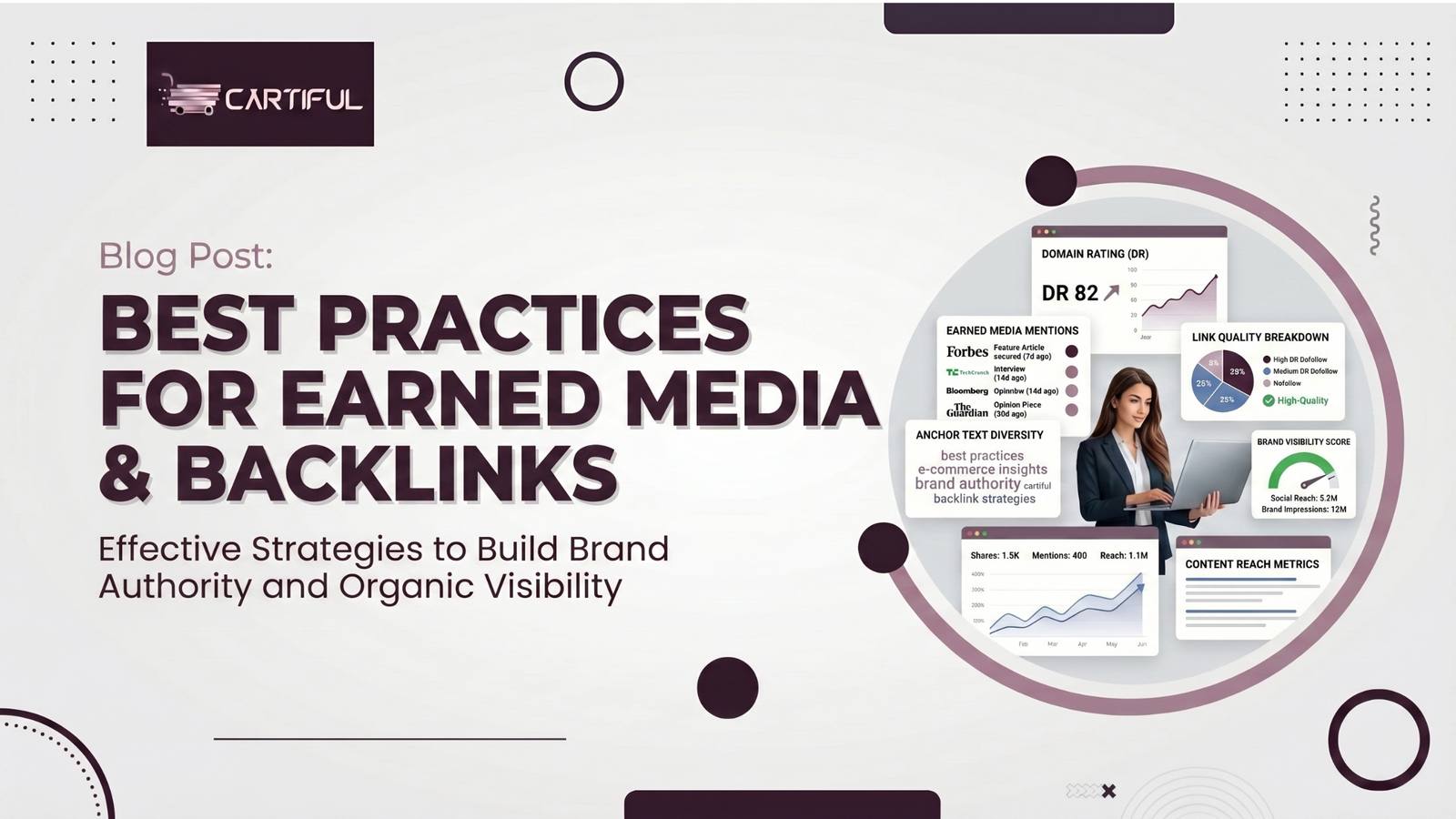
Most ecommerce stores invest heavily in ads, content, and social media, yet still struggle to earn trust in search results.
The missing piece is often earned media and backlinks.
Search engines and shoppers both rely on third-party validation. If other sites, media outlets, and creators are not talking about your store or linking to it, growth becomes harder to sustain.
This is where earned media and backlink building change the equation for ecommerce brands.
What Is Earned Media in SEO?
Earned media refers to brand mentions, press coverage, influencer features, and third-party content that promote a brand without paid placement.
In SEO, earned media becomes especially valuable when those mentions include backlinks pointing to your website.
Examples of earned media include:
- media articles mentioning your brand
- influencer product reviews
- podcast interviews
- blog features
- organic social media mentions
When these placements include backlinks, they strengthen off-page SEO by passing authority and trust signals to your website.
Why Earned Media & Backlinks Matter for Ecommerce
Problem: Ecommerce stores compete in search results where trust matters as much as relevance.
Solution: Earned media and backlinks act as external proof that your store is credible, useful, and worth ranking.
Earned media builds brand authority through press mentions, social media mentions, influencer shoutouts, and word-of-mouth recommendations.
Backlinks turn that exposure into measurable search engine value by passing authority, driving referral traffic, and improving search engine rankings.
For ecommerce store owners, this combination increases brand visibility, search engine visibility, and long-term website traffic.
Best Practices for Earned Media & Backlinks
Earned media and backlinks work best when they follow a clear structure.
Below are the foundational best practices that ecommerce store owners should focus on to build brand authority, media coverage, and search engine visibility that lasts.
1. Start With a Clear Earned Media Strategy
Earned media only works when it is intentional. Random press mentions, scattered social media mentions, or one-off guest posts rarely support search engine rankings or long-term brand visibility.
A strong earned media strategy connects media coverage directly to backlink building and search engine optimization goals. This means knowing which media outlets matter, what type of stories they publish, and how links should point back to your site.
For ecommerce store owners, this usually involves prioritizing high-authority backlinks from relevant publications, creators, and platforms that already influence buyer decisions.
It also means deciding whether links should support:
- the homepage
- category pages
- pillar pages
- deep product links
based on keyword research and content optimisation goals.
2. Build Newsworthy Content for Media Coverage
Media outlets do not link to standard product descriptions or sales pages. They link to content that adds context, insight, or value for their audience.
For ecommerce brands, earned media grows faster when content creation is designed for coverage, not just on-page SEO.
Content that performs well for media placements often overlaps with strong content marketing and Digital PR efforts.
Effective content strategies for earned media include:
- Data-backed studies using store or industry data
- Original insights pulled from customer behavior or sales trends
- FAQ-style posts and pillar pages answering common buyer questions
- Localized content that appeals to regional media outlets
For example, an ecommerce store selling fitness equipment might publish a study analyzing home workout trends based on thousands of customer purchases. A media outlet covering health and lifestyle trends may cite that data and link back to the original article.
This type of content increases brand mentions, creates backlink opportunities, and supports search engine rankings.
Cartiful helps ecommerce stores identify which content angles attract media coverage while still supporting keyword optimisation and off-page SEO.
3. Use Digital PR Instead of Mass Press Releases
Press releases on their own rarely earn high-authority backlinks or meaningful media coverage.
Digital PR works because it focuses on real stories rather than announcements sent to hundreds of inboxes.
Strong Digital PR starts with personalized outreach to media outlets that already cover ecommerce, retail, or consumer trends.
The pitch should clearly explain:
- why the story matters now
- how it connects to readers
- what unique insight the brand offers
Press releases still have a role, but they perform better when paired with proactive PR strategies that lead to earned media and backlinks rather than simple distribution.
4. Guest Blogging With Purpose
Guest blogging still supports earned media and backlink building when it is done with intent.
The value does not come from publishing anywhere that accepts submissions. It comes from placing content on sites that already attract the audience you want.
Guest blogging works best when:
- the site is relevant to ecommerce or your industry
- the content follows editorial standards
- anchor text reads naturally
Low-quality guest posts written only for links weaken brand authority.
Cartiful focuses on guest posts that send referral traffic and improve brand visibility, not just inflate link counts.
5. Earn Links Through Influencer Marketing
Influencer marketing is not only about social media exposure. It is also a consistent source of earned media and backlinks.
Influencer shoutouts often include:
- blog mentions
- YouTube descriptions
- podcast show notes
- resource links
For example, a skincare ecommerce brand may partner with a beauty blogger who publishes a full product review and links to the brand’s product page. This generates both referral traffic and a contextual backlink.
The goal is brand visibility and natural links rather than forced placements.
6. Monitor Brand Mentions and Turn Them Into Links
Many ecommerce brands already earn media without realizing it.
Brand mentions often appear without backlinks.
These are missed opportunities.
Media monitoring and social listening help identify these mentions so store owners can request a link where appropriate.
Turning existing brand mentions into backlinks is one of the most efficient link-building tactics available.
7. Optimize Anchor Text and Deep Links
Not all backlinks should point to your homepage.
Search engines expect natural link profiles that include a mix of:
- branded anchors
- descriptive anchors
- keyword-based anchors
Deep links to product pages, category pages, FAQ content, and pillar pages distribute authority across the site.
This strengthens overall search engine visibility.
8. Support Earned Media With Strong On-Page SEO
Earned media performs better when the destination pages are ready.
If referral traffic lands on slow pages or poorly structured content, both SEO and conversion value decline.
Important foundations include:
- clean XML sitemaps
- logical internal linking
- fast page load times
- pages aligned with search intent
Using Google Search Console and Google Analytics helps confirm that earned media traffic is indexed and converting.
Cartiful ensures earned media sends users to pages designed to support sales, not just rankings.
9. Track Media Performance and Link Quality
Earned media should not be measured by volume alone.
A few high-authority backlinks from relevant sites often outperform dozens of low-quality links.
Tracking should focus on:
- referral traffic
- link authority
- search engine ranking improvements
- audience sentiment
This keeps the strategy focused on impact rather than noise.
10. Build Local Links for Ecommerce Stores With Physical Presence
For ecommerce brands with stores, warehouses, or regional delivery, local link building supports local search engine optimisation.
Local press coverage, partnerships, and community events often lead to earned media from regional outlets.
These links strengthen off-page SEO while increasing trust with nearby buyers.
How to Evaluate a High-Quality Backlink
Not all backlinks provide equal SEO value.
When evaluating backlinks, ecommerce store owners should consider several factors.
Important signals include:
- Domain authority or site reputation
- Topical relevance to your industry
- Editorial placement within the content
- Natural anchor text
- Potential referral traffic
High-quality backlinks typically come from trusted publications, niche blogs, or media outlets that already attract your target audience.
Earned Media vs Backlinks: How They Work Together
Earned media and backlinks are often discussed separately, but they work best together.
Earned Media
Earned media focuses on brand visibility through:
- press coverage
- influencer features
- podcast interviews
- social mentions
This exposure builds brand awareness and credibility.
Backlinks
Backlinks convert that visibility into SEO value.
Backlinks pass authority signals from other websites to yours, helping search engines understand which brands deserve stronger rankings.
Research from Backlinko analyzing 11.8 million Google search results shows that pages with more high-quality backlinks tend to rank higher.
The strongest results occur when earned media includes:
- contextual links from trusted media outlets
- natural anchor text
- links to deeper pages rather than just the homepage
How Earned Media Supports Search Engine Optimization
Earned media strengthens off-page SEO signals that search engines use to evaluate trust.
Consistent brand mentions across media outlets and blogs signal relevance and authority.
Earned media supports SEO by contributing to:
- higher domain authority through backlinks
- stronger brand mentions across the web
- improved trust signals for search engines
Over time, this increases referral traffic and long-term organic visibility.
Earned Media Backlink Workflow
Successful earned media campaigns usually follow a repeatable process.
Typical workflow:
- Identify newsworthy insights or data
- Create content designed for media coverage
- Pitch the story to journalists or creators
- Earn media mentions and coverage
- Convert coverage into backlinks
- Track referral traffic and rankings
This workflow connects digital PR with measurable SEO outcomes.
Common Mistakes Ecommerce Stores Make
Even stores that invest in earned media and backlinks often see weak results because of avoidable mistakes.
Buying low-quality backlinks from irrelevant sites weakens brand authority.
Relying only on press releases without proactive outreach rarely generates meaningful coverage.
Ignoring unlinked brand mentions wastes easy backlink opportunities.
Repeating exact-match anchor text can make backlink profiles look unnatural.
Skipping performance tracking prevents store owners from understanding which placements actually drive traffic and rankings.
Tools That Support Earned Media & Backlinks
Earned media and backlink building work best when performance is tracked consistently.
Helpful tools include:
- Google Analytics to track referral traffic
- Google Search Console to monitor backlinks and indexing
- Ahrefs for backlink analysis and competitor link research
- SEMrush for backlink audits and outreach opportunities
- BuzzSumo for identifying journalists and trending content
- Google Alerts for monitoring brand mentions
Cartiful integrates these tools into regular growth sprints so earned media and backlink building stay measurable and aligned with ecommerce goals.
Conclusion
Earned media and backlinks work when they are built with intent rather than shortcuts.
For ecommerce store owners, consistent media coverage paired with high-quality links builds trust with both shoppers and search engines.
Over time, this combination strengthens brand authority, improves search engine visibility, and drives sustainable website traffic.
Cartiful helps turn that visibility into measurable growth by connecting earned media, backlink building, and long-term search performance.
Below is an FAQ section optimized for SEO and AEO that fits naturally at the end of your blog.
Each answer is 40–80 words, self-contained, and numbered so it aligns with your Cartiful content framework and improves AI extractability.